Orpheus mourns his beloved Eurydice. The God of Love grants him a chance: to descend into Hades and bring her back, on one condition — that he does not turn to look at her until they reach the exit. The music follows his soul: from the heartbreaking lament “Objet de mon amour”, to the horror of the Furies, to the serenity of the Elysian Fields, with the celebrated flute solo, and finally to the supreme aria “J’ai perdu mon Euridice” — at which point Orpheus has yielded. He turns to look at her, and Eurydice dies for the second time.
The myth of Orpheus proved pivotal in the development of opera: from Euridice by Jacopo Peri, the earliest surviving opera, to Orpheus by Luigi Rossi, the first opera to be performed in France, to the grandeur of Orfeo by Claudio Monteverdi, passing through the pen of Joseph Haydn and the comic eye of Jacques Offenbach, up to the 20th century with Hans Werner Henze and Philip Glass.
Yet it was Gluck’s Orfeo that literally changed the history of opera: a revolutionary and restless work, the product of a genius who saw far beyond his time, Gluck’s Orfeo ed Euridice was first performed in Vienna in 1762.
Hector Berlioz was an ardent admirer of Gluck from a very early age. By his own account, Gluck was the reason the young Berlioz turned to music. It is no coincidence, then, that the director of the Théâtre-Lyrique in Paris, in 1859, asked Berlioz to prepare a new version of Orfeo, in which the title role would be sung by the most celebrated contralto of the age, Pauline Viardot.
Berlioz, with absolute fidelity to Gluck’s original, combined the two authentic versions of 1762 and 1774, and modernised the orchestration without altering the spirit of the work.
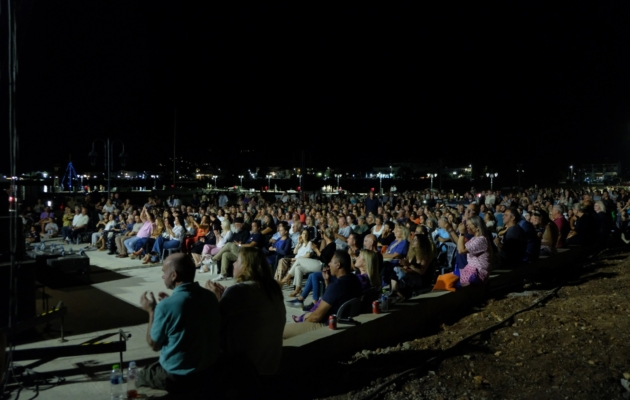
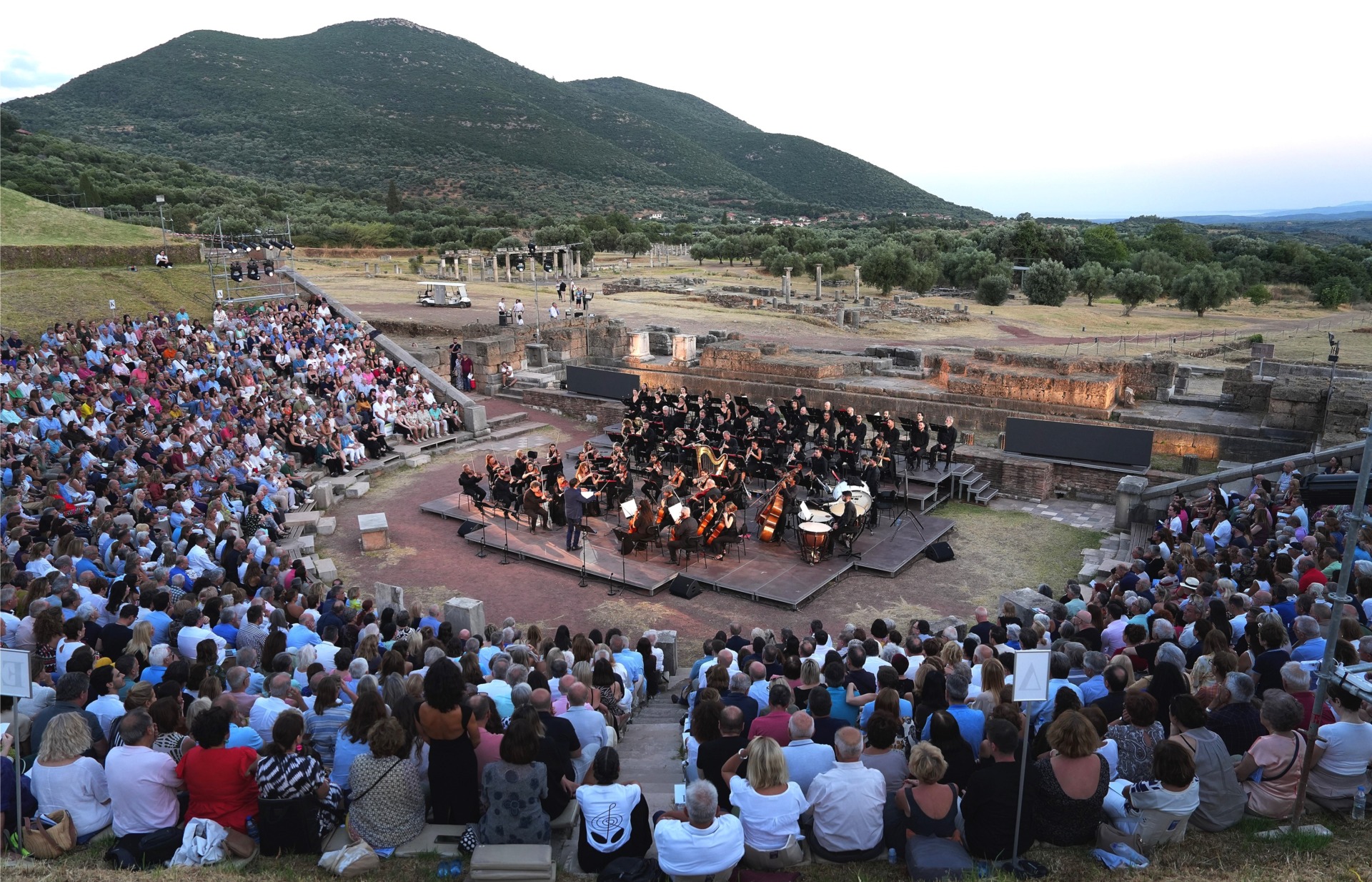
This is the version that Camera the Friends of Music Orchestra will be presenting this year at the theatre of Ancient Messene.
Version in french by Berlioz with Greek and English surtitles
Sponsor: The George & Victoria Karelias Foundation

With the support: The J.F. Costopoulos Foundation
With thanks to the
Municipality of Messene for the support

the Εphorate of Antiquities of Messenia
for the permission to use the Ancient Theatre of Messene

DIAZOMA Αssociation for the cooperation

Society of Messenian Archeological Studies