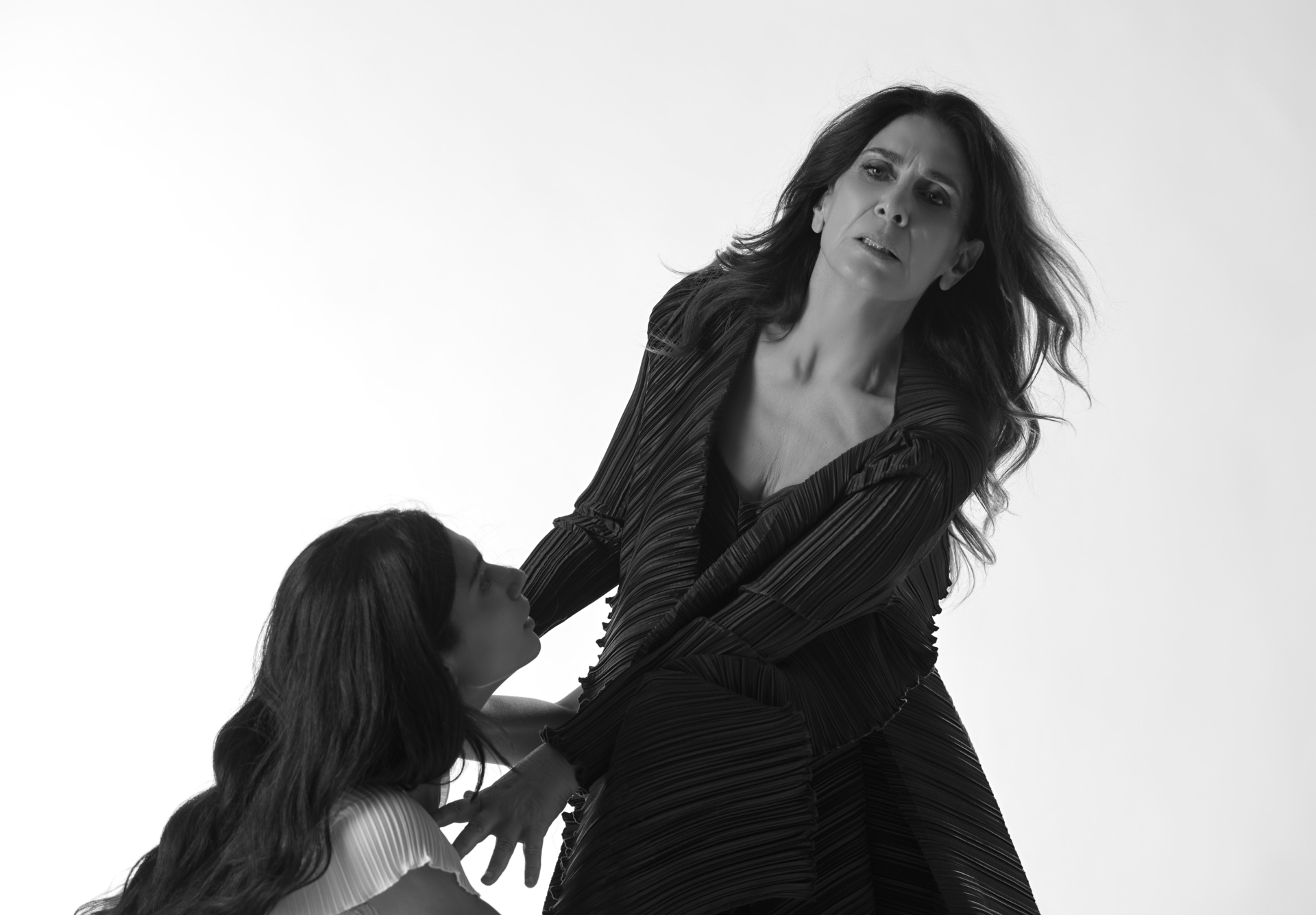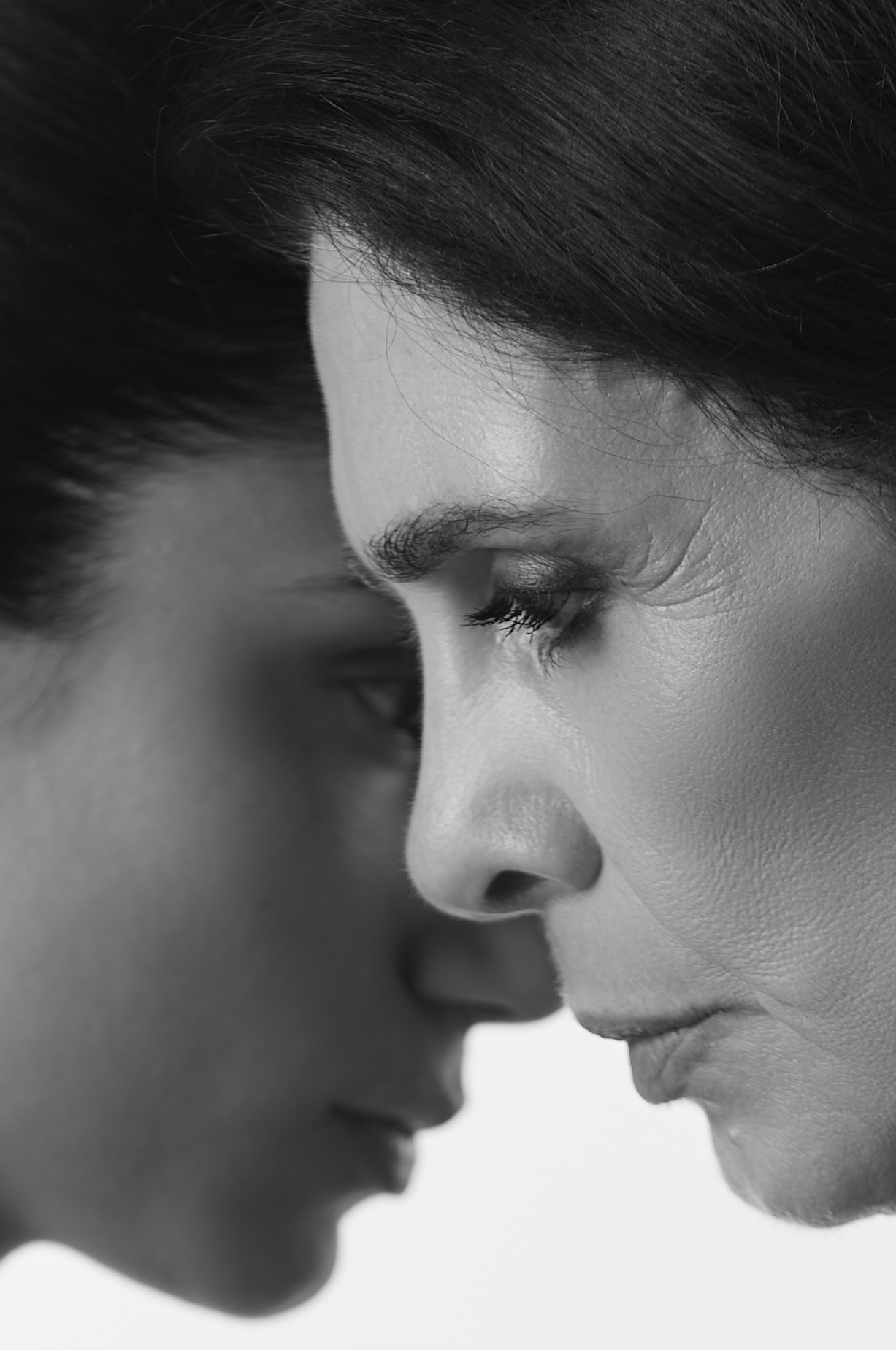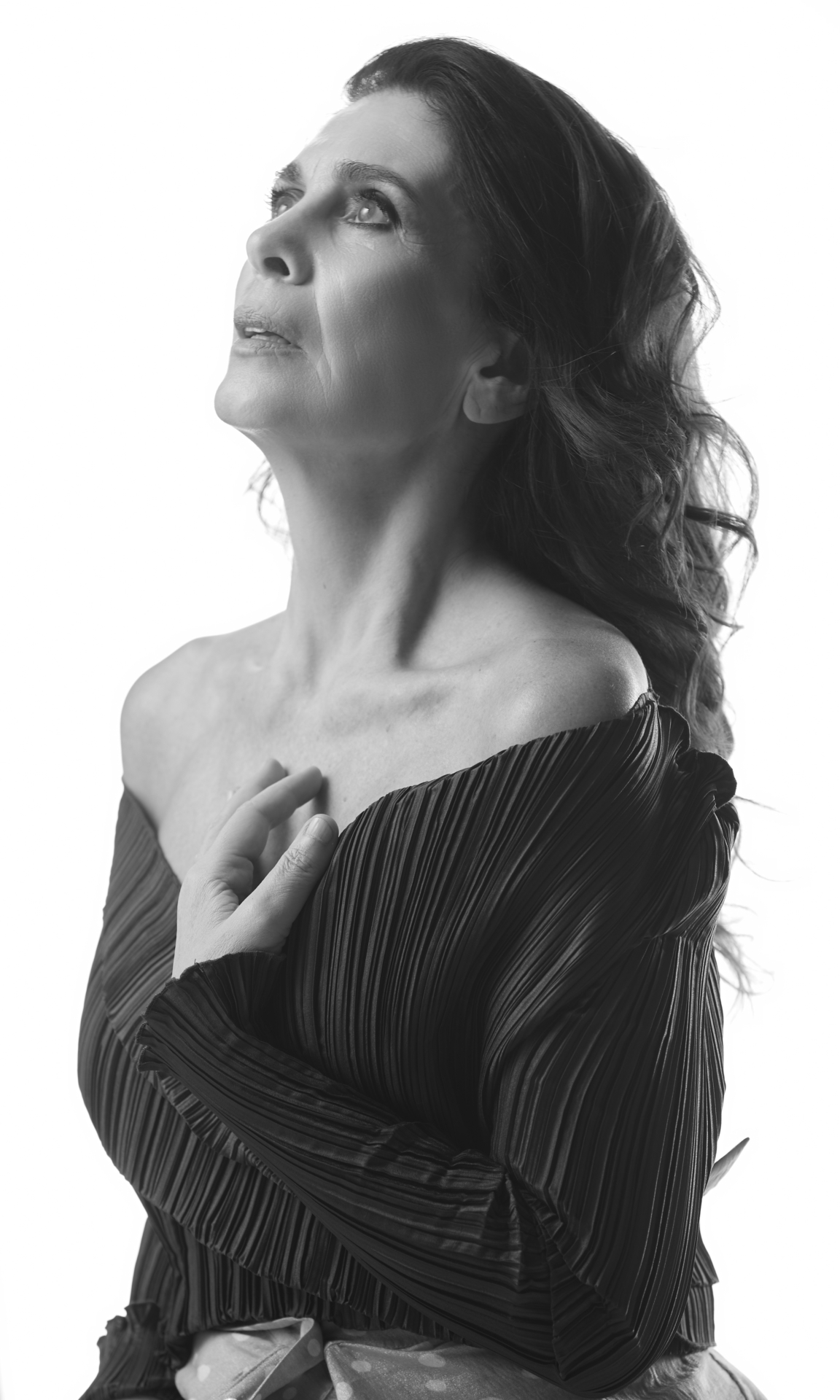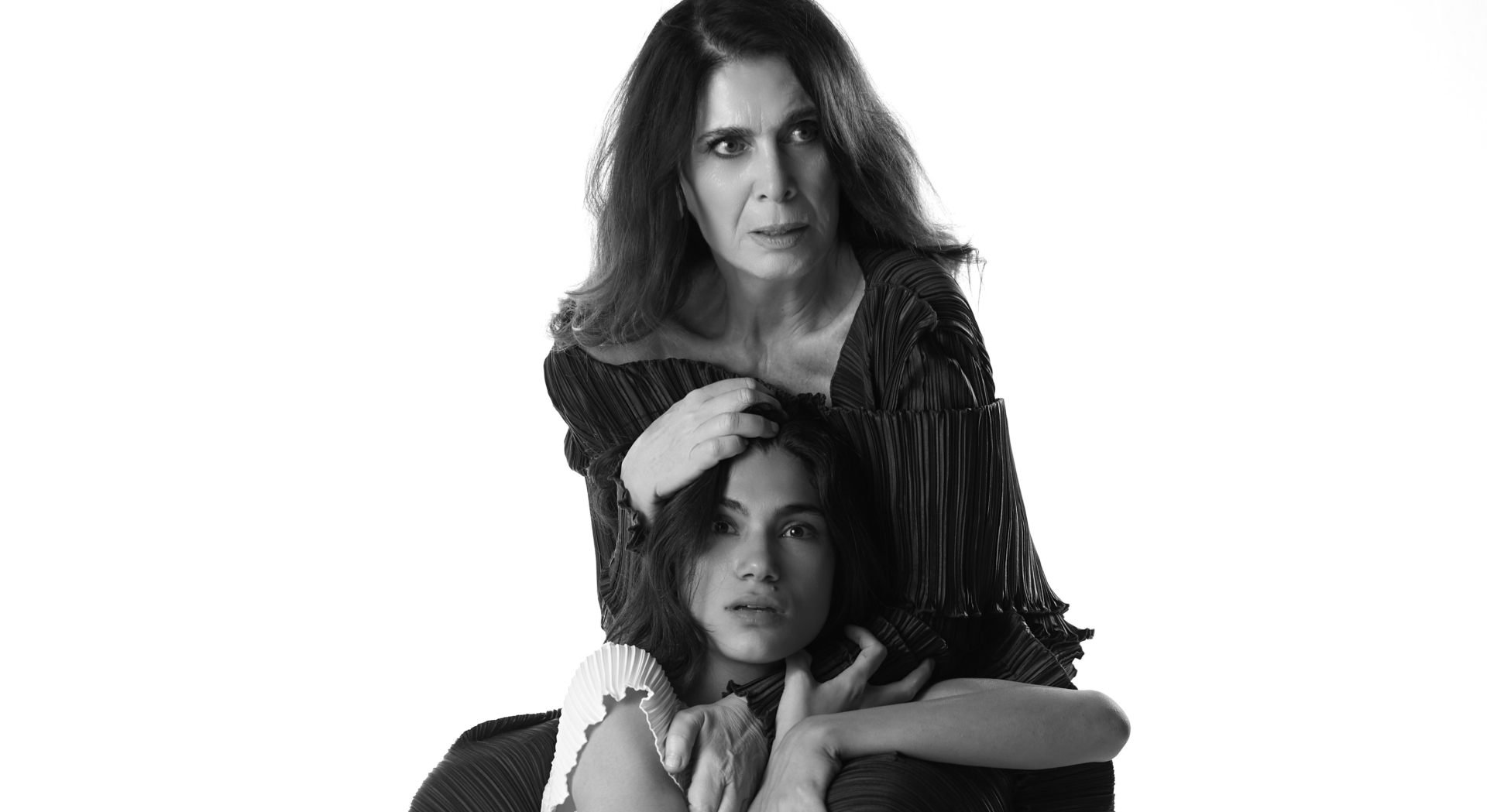
This monologue is not a reenactment; it is a call to stand before History, to connect with it, and to make it personal. Through the performance of Katerina Didaskalou and the words of Marguerite Yourcenar, we search for the moment when desire becomes a rupture, overturning the forms of official History.
Here, Clytemnestra does not recite events; she feels them, touches them, smells them, justifies them, and redeems them as a personal act of rupture. She dissolves the distance with the audience, and even with History’s linearity—creating a space where the historical event “emerges” before us, in which we coexist and participate. In the face of History, no one is a passive spectator.
What does it mean to murder someone who has just returned from the destruction of a country? Is it an act of justice, revenge, self-destruction, redemption? Or something entirely different? The direction focuses on the subtle shades of performance, aiming to reveal the human question amid the speed and bombardment of information that defines our era. Technology does not estrange; it becomes a tool that sparks the search for meaning, allowing silence and detail to acquire explosive power.
Based on “Clytemnestre” from Marguerite Yourcenar’s Feux (Fires)
We would like to thank Ms. Anouk RIGEADE, Cultural Attaché at the French Institute of Greece,
and Ms. Anna Pataki from Patakis Publications, for securing the rights to the work.
Smoke effects will be used during the performance.