

At the center of the crossroads that links the Balkans to North Africa from north to south, and the Near East to the central Mediterranean from east to west, an island that resembles a continent, Crete, emerged from the Aegean Sea millions of years ago. And upon it, peoples and civilizations have taken root for thousands of years.
Homer sang of it (Odyssey, Rhapsody τ, 172–183): rich, fertile, “embraced by the sea,” great with ninety (or a hundred) cities, inhabited by Pelasgians and Eteocretans and Achaeans, Dorians and Kydonians — peoples of great antiquity, both pre-Hellenic and Hellenic.
On this island, the “pieira,” that is, the fertile and rich land, a city of antiquity stood at its very heart: Eleutherna.
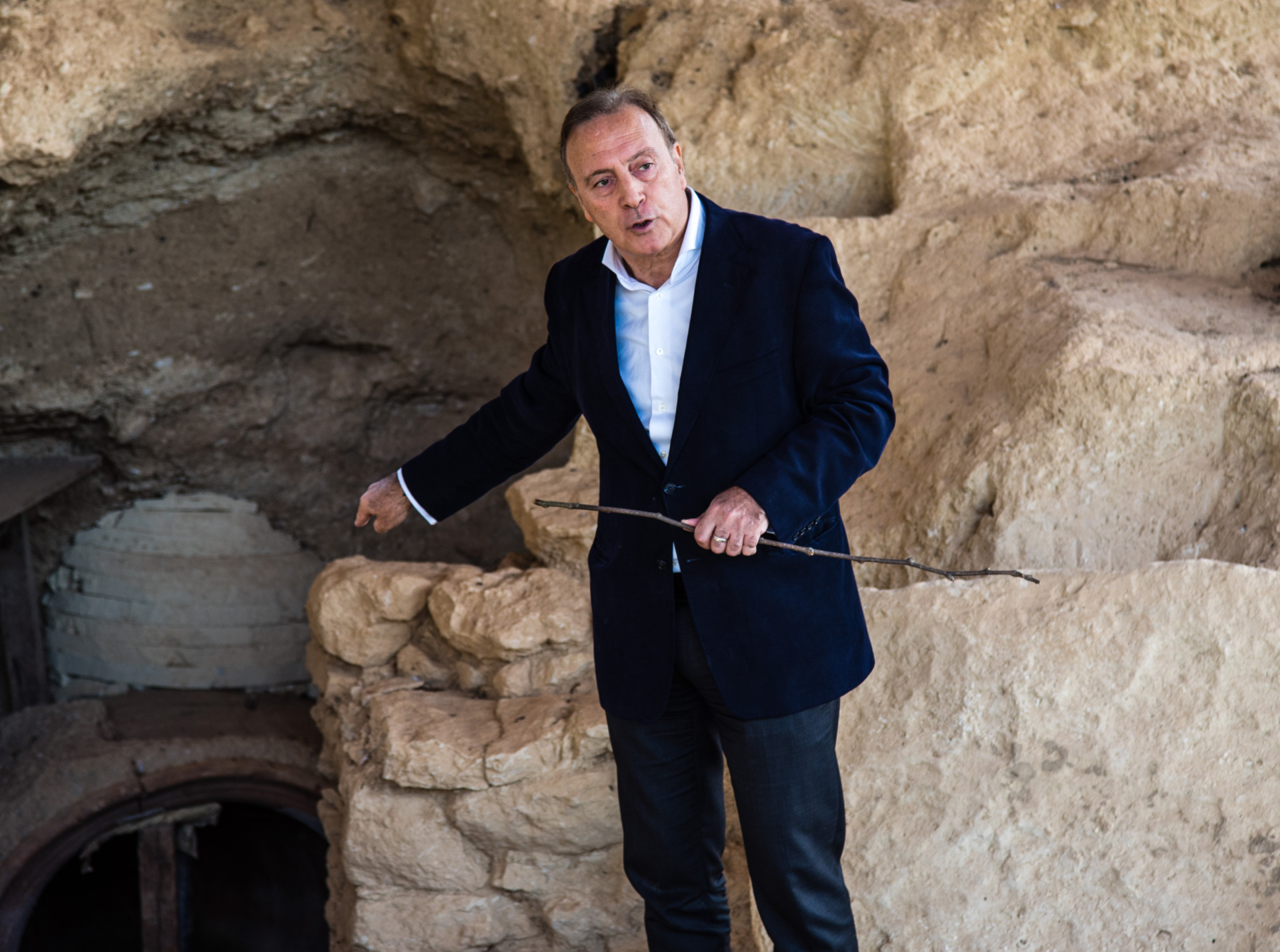
By good fortune, for 40+1 years now I have been excavating it together with my students and collaborators, and at the same time excavating myself (“dig within”). The archaeologist is a kind of surgeon. Just as the physician operates on the human body, so too the archaeologist cuts into the body of the earth, in space and in time.
I will recount to you this forty-year experience of mine: how, from the villages that now bear its name — villages to which, in the 1980s, a bus ran only twice a week — it has become the Eleutherna of today, with its archaeological site and its Museum, known throughout the world for its scientific and cultural activities.
The city of the mythical Eleutheras, the city of the free, was an archaic society open to the crossroads of the eastern Mediterranean, connected to the other cities of Crete, to the Peloponnese, Attica, the Cyclades, the islands of the eastern Aegean, the Dodecanese, Asia Minor, Cyprus, Phoenicia, Egypt, and even Etruria.
Thousands of objects of its material culture — in clay, stone, and metal (gold, silver, bronze, and iron), ivory, glass, faience, and more — speak eloquently of its civilization from Minoan through medieval times, reaching its peak in the Early Iron Age (9th–6th centuries BC). They speak, too, of its customs and traditions, of its connection to the Homeric epics and its funeral pyres, of the cremation of a warrior-prince and its relation to that of Patroclus in Rhapsody Ψ of the Iliad, of its priestess-princesses, of the confirmation of Herodotus’s account of Phoenicia and its link to the founding of Cyrene in present-day Libya… in short, it is a city that is constantly emerging anew.
